
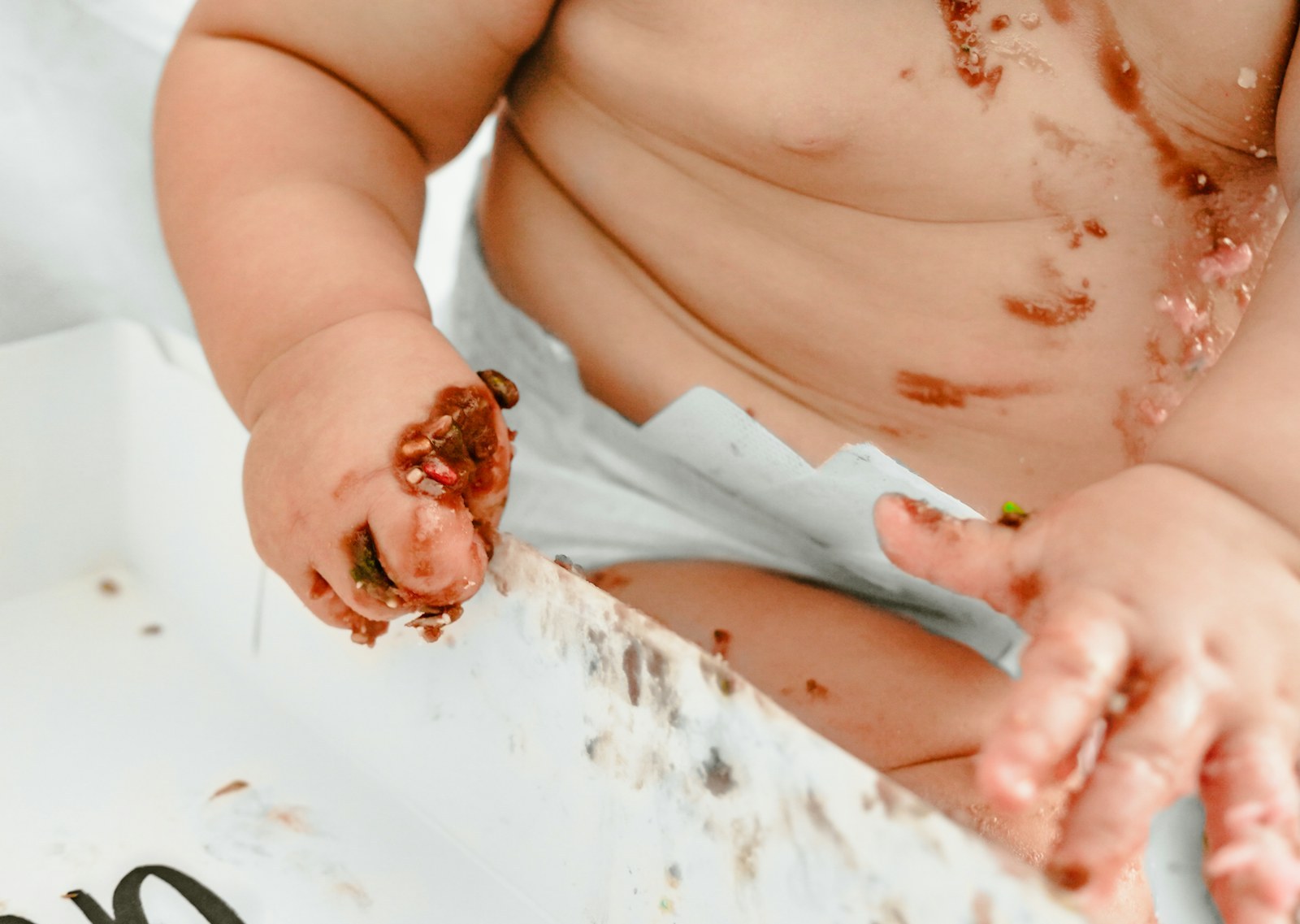
These are low-prep sensory activities that actually match what a baby’s brain and body are doing at each stage, not just “cute things to try.” Skip anything your pediatrician has flagged as off-limits for your kid, and always stay within arm’s reach around anything small enough to mouth.
0 to 3 months: tracking, textures, and tummy time
- High-contrast cards: black and white patterns held 8 to 12 inches from her face. Newborn vision is blurry, so bold contrast is what actually registers.
- Tummy time on your chest: reclining and laying baby chest-down on you counts, and it’s easier on a fussy baby than the floor.
- Slow face tracking: move your face side to side a few inches, wait for his eyes to follow. Thirty seconds is a full session at this age.
- Textured fabric play: brush a soft cloth, a piece of silk, and something slightly bumpy across her palm and the sole of her foot.
- Black and white mobile: hang one over the changing table, not the crib during sleep, so it becomes a predictable during-the-day cue.
4 to 6 months: reaching, grabbing, and mouthing
- Rattle pass: put a lightweight rattle just out of reach to encourage the reach-and-grab motion that’s developing now.
- Water play in the bath: a wet washcloth she can squeeze, splash, and mouth is genuinely full sensory input.
- Textured board books: cloth or board books with different surfaces on each page. He’ll mouth the corners, which is normal.
- Tummy time with a mirror: an unbreakable baby mirror propped in front of her during tummy time gives her a reason to lift her head longer.
- Frozen washcloth teether: wet a washcloth, twist it, and freeze it for 20 minutes. Cold + texture + something to gnaw on.
7 to 9 months: sitting, banging, and object permanence
- Muffin tin drop: a muffin tin and a handful of board books or silicone cups to drop in and dump out, over and over.
- Peekaboo with a twist: hide a toy under a cloth while she watches, let her pull the cloth off. This is object permanence practice, not just a game.
- Sound bin: a few kitchen items that make different sounds when tapped, a wooden spoon, a metal measuring cup, a plastic container.
- Crawling tunnel: a couch cushion tunnel or an open cardboard box to crawl through builds the same skills as store-bought tunnels.
- Sensory bag: cooled, sealed gallon bag with hair gel and a few small waterproof objects, taped shut and taped to the floor for safe squishing.
10 to 12 months: cause and effect, early problem-solving
- Pots and pans band: wooden spoons and a few pots. It’s loud, but banging on purpose is a real motor and cause-effect milestone.
- Stacking cup towers: knock them down more than you build them up at this age, and that’s the point.
- Water table or bin: a shallow bin with a few inches of water and cups for pouring, right before bath time so cleanup is easy.
- Push-and-pull walker toy: anything sturdy enough to hold onto while cruising along furniture.
- Simple shape sorter: even just matching a ball to a round hole counts as the activity right now, precision comes later.
Frequently asked questions
My baby doesn’t seem interested in a sensory activity, is that a problem?
Not usually. Interest varies a lot by mood, tiredness, and hunger, not just developmental readiness. If an activity falls flat, try it again another day rather than assuming it’s the wrong activity for your baby’s age.
How much sensory play does a baby actually need each day?
There’s no required amount. A few short sessions of a few minutes each, spread across the day and mixed in with regular caregiving and free play, cover what most babies need. More structured activity time isn’t inherently better than unstructured exploration.
Do premature babies follow this same age-based list?
Many parents of babies born early use adjusted age, based on the original due date rather than birth date, when picking activities from a list like this. If your baby was born significantly early, it’s worth asking your pediatrician whether adjusted or chronological age makes more sense for pacing new activities.
Do I need to buy special sensory toys, or can I use things around the house?
Household items work for most sensory activities at this age. Wooden spoons, measuring cups, fabric scraps, and food-safe items like rice or oats cover a lot of the same ground as purpose-made sensory toys. Store-bought options can add variety in texture or sound, but they’re not necessary to get the developmental benefit.
What if my baby puts everything in their mouth during a sensory activity?
That’s expected and part of how babies explore at this age, not a sign the activity is a bad fit. Stick to activities using food-safe materials or large enough pieces to avoid a choking hazard, and stay within arm’s reach rather than trying to fully prevent mouthing, since that’s a normal part of sensory exploration through the first year.
If you want ideas matched to your kid’s exact age instead of a general range, the Activity Finder tool factors in age, time available, and how much mess you’re up for. And if today calls for something bigger than a lap activity, our toddler activities at home roundup has ideas for the walking-and-talking stage.