
Best Car Seats of 2026
Six standout picks across every stage — from newborn to booster — plus links to our full deep-dive comparisons for budget, twins, small cars, and rotating seats.
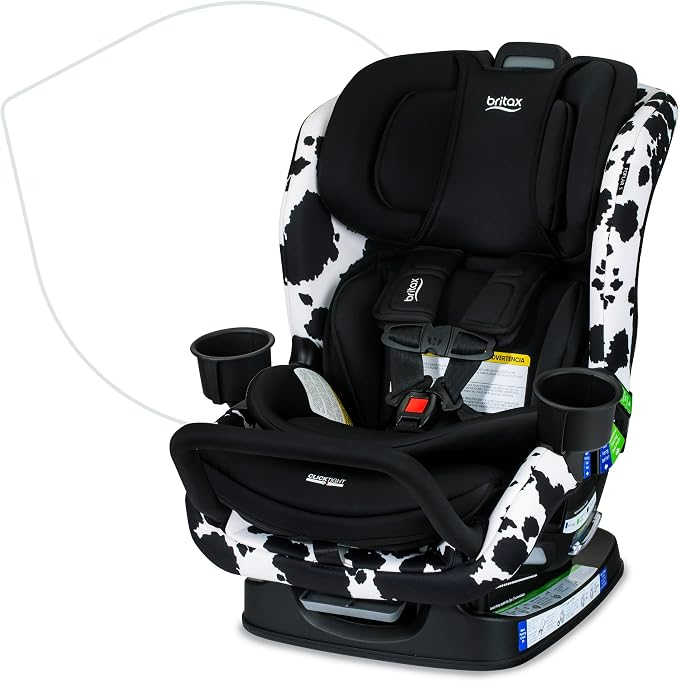
Our picks for the best car seats 2026 has to offer start with the Britax Poplar S ($379.99), a slim 17″ convertible with ClickTight installation that fits rear-facing to 50 lbs and forward-facing to 65 lbs. But the right seat really depends on your situation: newborns do best in a dedicated infant seat, families with twins need the narrowest possible width, and small cars need a seat that doesn’t eat the whole back row. Below are our top picks by category, each linking to a full head-to-head comparison.
Best car seats 2026: our top picks

Britax Poplar S
A slim 17″ convertible with ClickTight installation that’s genuinely easy to get right on the first try, plus a stability bar that reduces movement while rear-facing.
Why this one: ClickTight installation removes the usual guesswork with seatbelt routing — you open the seat, thread the belt, and close it. The 14-position no-rethread harness also means fewer adjustments as your child grows.
Not great for: Families who need 3-across seating in a small back row — at 17″ wide it’s slim, but not the narrowest option available.

Clek Liing
A premium rear-facing-only infant seat with a metal load leg and Rigid-LATCH installation, built specifically for newborns and small babies.
Why this one: The included head and body support pillows make it one of the safest choices for babies under 11 lbs, and the load leg dramatically reduces crash-test rotation compared to seats without one.
Not great for: Budget-conscious families — it’s one of the priciest infant seats on the market.

Safety 1st Grow and Go Sprint
An all-in-one seat that covers rear-facing, forward-facing, and booster mode for around $150 — without cutting corners on federal crash standards.
Why this one: It genuinely grows with your child from infancy through booster age in one seat, which is hard to find this cheap. See our full budget roundup for four more picks under $200.
Not great for: Parents who want premium fabrics or the narrowest possible width — it’s a mid-width seat built for value, not 3-across seating.

Clek Foonf
At just 16.9″ wide, the Foonf is one of the narrowest convertible seats made, with a steel anti-rebound bar and extended rear-facing to 50 lbs.
Why this one: The compact footprint makes it realistic to fit in compact sedans and hatchbacks without pushing the front seats forward. See our full small-car roundup for four more space-saving picks.
Not great for: Budget shoppers — the Foonf is a premium-priced seat.

Diono Radian 3RXT
The Radian’s famously slim, steel-reinforced build makes fitting two (or three) car seats across one row realistic, without sacrificing side-impact protection.
Why this one: It’s one of the only convertible seats that genuinely lasts from rear-facing infant through booster age in a single seat — useful when you’re buying two at once. See our full twins roundup for four more picks.
Not great for: Families who want the lightest possible seat to move between cars — at nearly 26 lbs, it’s on the heavier side.

Evenflo Revolve360 Extend
A one-hand 360-degree rotating seat that turns to face the door for loading, then locks back into place — genuinely easier on your back than wrestling with a fixed seat.
Why this one: The rotation feature isn’t a gimmick — it meaningfully reduces the back strain of loading a squirming toddler, especially in tight parking spots. See our full rotating-seat roundup for four more picks from $300 to $800.
Not great for: Anyone who wants the lightest, simplest fixed seat — the rotating mechanism adds weight and cost.
How to choose the right car seat by stage
- Newborn to ~12 months: Use a dedicated rear-facing-only infant seat (like the Clek Liing) — they’re designed for a baby’s smaller, more fragile frame and click into a stroller for easy transfers.
- 1 to ~4 years: Move to a convertible seat and keep your child rear-facing as long as the seat allows — most convertibles now rear-face to 40–50 lbs, well past the old “age 2” rule of thumb.
- ~4 to 8 years: Forward-facing with a 5-point harness until your child outgrows the harness weight or height limit, then transition to a booster.
- ~8 to 12 years: Belt-positioning booster until they pass the 5-step test (sits all the way back, knees bend at the seat edge, belt sits on the shoulder not the neck, lap belt sits low on the hips, and they can stay seated properly for the whole ride).