
Best Mini Cribs for Small Spaces of 2026
Five cribs built for apartments, shared rooms, and tight nurseries — without cutting corners on safety certification.
The best mini cribs for small spaces trade the roughly 28″ x 52″ footprint of a standard crib for something closer to 26″–29″ wide by 38″–40″ long — small enough for an apartment nursery or a shared room, while still meeting the same federal crib safety standards. Our top pick, the Babyletto Gelato 4-in-1, is purpose-built as a mini crib rather than a shrunk standard one. If budget matters most, the Dream On Me Aden delivers the same GREENGUARD Gold certification for under $150.
Our 5 picks for the best mini cribs for small spaces

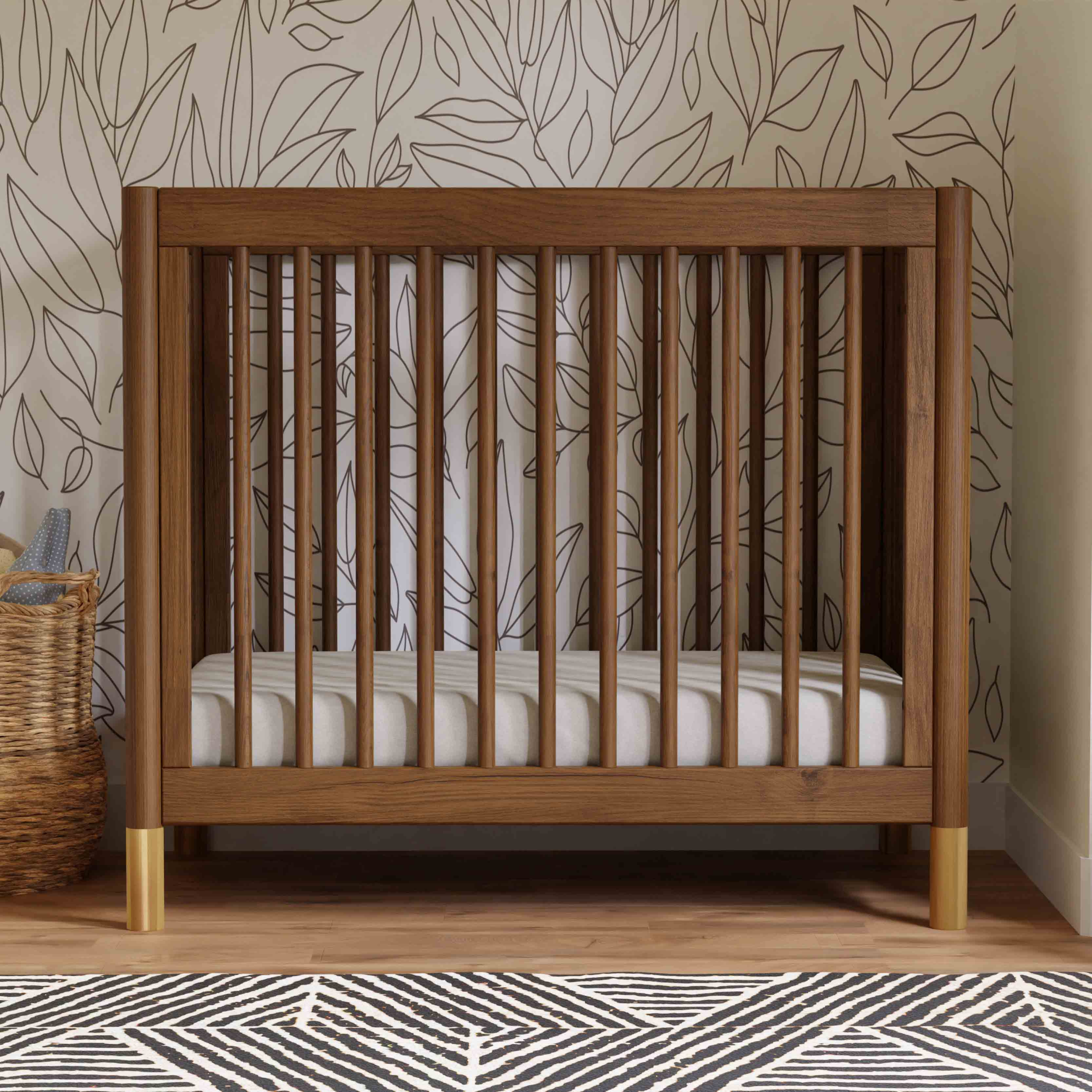
Babyletto Gelato 4-in-1 Convertible Mini Crib
A genuinely small footprint (39.75″ x 26″) that still converts all the way to a twin bed, with GREENGUARD Gold certified, FSC-certified wood.
Why this one: The Gelato is built specifically as a mini crib from the ground up, not a shrunk-down standard crib, so the proportions and slat spacing are designed around the smaller footprint. Interchangeable feet let you match your nursery’s style without buying a new crib.
Skip it if: you want the conversion kits included — the twin bed and toddler conversion pieces are sold separately, adding to the total cost over time.

Graco Stella 4-in-1 Convertible Mini Crib
Comes bundled with a 2.75″ water-resistant mattress, so there’s nothing extra to buy before baby’s first night in it.
Why this one: Most mini cribs make you buy the mattress separately — the Stella includes one, which closes a real gap versus competitors at this price. Three adjustable mattress heights let you lower the floor as baby starts pulling up.
Skip it if: you want a crib that converts to a twin bed without buying anything else — the conversion kit for daybed/twin is sold separately, same as most mini cribs on this list.

Dream On Me Aden 4-in-1 Convertible Mini Crib
A sub-$150 mini crib that still hits GREENGUARD Gold certification and three mattress heights — the lowest price on this list by a wide margin.
Why this one: The Aden delivers the same core safety certifications as mini cribs twice its price, made from sustainable pinewood with a non-toxic finish. It’s a solid choice if you need a crib now and can add conversion pieces later.
Skip it if: you want the same weight capacity as the pricier picks — at 50 lbs it’s lower than average, so check it against your growth timeline.

Storkcraft Petal 4-in-1 Convertible Mini Crib
Four mattress height settings — more than any other pick here — plus a bonus 3-inch foam mattress included in the box.
Why this one: The extra height setting matters more than it sounds: it means more runway before you have to switch to the lowest position, and two footboard height options at the twin-bed stage. The included mattress is JPMA certified and water-resistant.
Skip it if: you have an especially tight space — at 43.39″ wide, the Petal is the largest footprint on this list, closer to a standard mini crib than the more compact Gelato or Stella.

dadada Soho 3-in-1 Convertible Crib
Solid beechwood construction made in Italy, with a mid-century silhouette that looks like furniture, not a nursery appliance.
Why this one: This is the pick for parents who want a crib built to last well beyond the nursery years, in solid wood rather than engineered composite. It fits a standard-size crib mattress rather than a mini one, so sizing up later is simpler.
Skip it if: you actually need a small footprint — at over 53″ long, the Soho is closer to a standard crib than a true space-saving mini crib, and the price reflects premium materials, not compactness.
How to choose a mini crib for a small space
- Measure your space before you shop. Mini cribs typically run 24–29″ wide by 38–43″ long, versus about 28″ x 52″ for a standard crib — know your available footprint in inches, not just “small.”
- Check for GREENGUARD Gold certification. This means the crib was screened for thousands of chemicals and VOCs — especially worth checking in a small room with less air circulation.
- Confirm the mattress situation. Mini cribs need a mini crib mattress (roughly 24″ x 38″), not a standard crib mattress. Some picks include one; others require a separate purchase — factor that into your budget.
- Look at what it converts to, and what that costs. Most mini cribs advertise conversion to a daybed or twin bed, but the conversion kit is almost always sold separately. Price that in before comparing totals.
- Weigh mini crib vs. standard crib with a smaller room layout. If your space can fit a standard crib at all, it’s a slightly tighter fit but gives you a bigger mattress and more resale value later; a true mini crib is the better call when a standard crib genuinely won’t fit. Any of the five picks above count among the best mini cribs for small spaces precisely because they don’t skip certification to hit a smaller footprint.
Is a mini crib actually smaller, or just a marketing name?
It’s genuinely smaller. A standard full-size crib interior measures about 28″ x 52″ per federal crib safety regulations, while a mini crib is typically closer to 24″ x 38″ — roughly 30% less floor space. That difference is real enough to matter in a studio apartment, a shared sibling room, or a nursery corner that can’t fit a full-size crib and a dresser. Safety-wise, both sizes are required to meet the same federal crib standards (CPSC 16 CFR 1219 for full-size, 1220 for non-full-size/mini cribs) — a mini crib isn’t a lesser-tested product, just a differently sized one. The best mini cribs for small spaces on this list all carry GREENGUARD Gold certification on top of that baseline. For the full federal standard, see the Consumer Product Safety Commission’s crib safety regulations.