
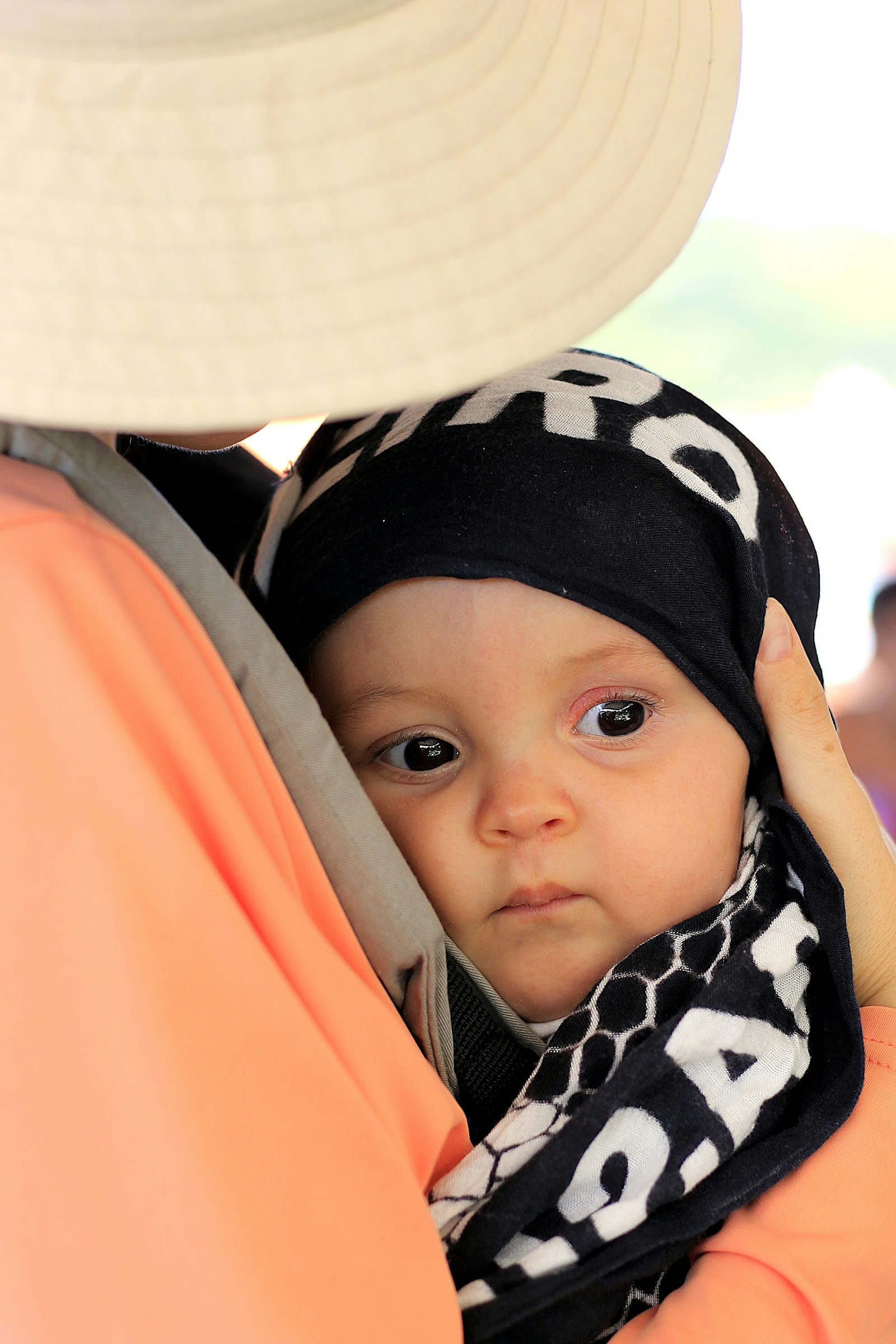
Baby Carrier for Hiking With a Newborn: What to Use Before 6 Months
You don’t need a framed hiking backpack to take a newborn on the trail — you need the opposite. Before about 6 months, the safer, more practical choice is the soft-structured carrier or wrap you likely already own, paired with a flatter trail, more frequent stops, and real sun protection.
Why a framed hiking carrier won’t work yet
Every framed backpack carrier on the market — the Osprey Poco, Deuter Kid Comfort, Kelty Journey PerfectFit, and similar models — seats a child upright in a rigid frame, which assumes they can hold their own head steady and sit without support. A newborn can’t do either, so manufacturers rate these carriers starting around 6 months, and using one earlier isn’t a workaround, it’s a fall and airway risk the carrier was never designed to prevent. If you’re deciding between carrier types for an older baby, see our full Best Baby Carriers for Hiking comparison instead — this guide is specifically for the stretch before that’s an option.
Choosing a baby carrier for hiking with a newborn
Below 6 months, the right tool is an everyday soft-structured carrier or a wrap rated from about 7 lb, the same category covered in our Best Baby Carriers for Newborns guide. A structured carrier with a padded waist belt (the Ergobaby Omni Breeze and Baby Tula Free-to-Grow are two adjustable options from that list) tends to hold up better on uneven trail surfaces than a stretchy wrap, since the wrap’s fabric can shift and loosen as you walk. A wrap still works well for shorter, flatter walks and gives a snugger, closer fit for very small newborns under the structured carriers’ minimum weight.
| Carrier type | Best for | Watch out for |
|---|---|---|
| Soft-structured carrier (adjustable panel) | Longer or uneven trails, once baby meets the 7 lb minimum | Bulkier to pack than a wrap; still needs shade/sun cover added |
| Stretchy or woven wrap | Shorter, flatter walks; babies under a structured carrier’s minimum weight | Fabric can loosen on rougher terrain — retighten often |
| Framed hiking backpack | Not yet — wait until baby sits unassisted, generally 6 months | No head/neck support for a newborn; not rated for this age |
What actually changes about hiking with a newborn
- Sun protection matters more than clothing alone. The American Academy of Pediatrics advises keeping babies younger than 6 months out of direct sunlight, favoring shade from a tree, umbrella, or canopy, and dressing them in tightly-woven clothing that covers the body — sunscreen on a newborn should be limited to small exposed areas like the face, and only when shade and clothing aren’t options.
- Check in more often than you would with an older baby. A carried newborn can’t shift position or tell you they’re too warm, so plan to check face and body temperature, airway clearance, and the carrier’s fit every 15-20 minutes, the same interval commonly recommended for newborn babywearing generally.
- Pick a flatter, shorter, well-maintained trail. Soft-structured carriers and wraps aren’t built for scrambling or technical terrain the way a framed carrier’s rigid frame is — an easy, even path is a fit-for-purpose choice at this age, not a compromise.
- Talk to your pediatrician before hiking somewhere notably higher in elevation than home. Altitude tolerance for young infants is an individualized question best answered by whoever knows your baby’s health history, especially for a premature or medically complex newborn.
FAQ
Best Baby Carriers for Newborns of 2026
Best Baby Carriers of 2026: The Complete Guide