
Activities for Toddler Twins at Home: How to Keep Both Busy at Once
Activities for toddler twins at home work best when there are genuinely two of everything, or the activity is open-ended enough that it doesn’t matter who touches what first. A single toy, a single bin, or a single “your turn” system that works fine for one toddler usually turns into a fight the moment there are two.
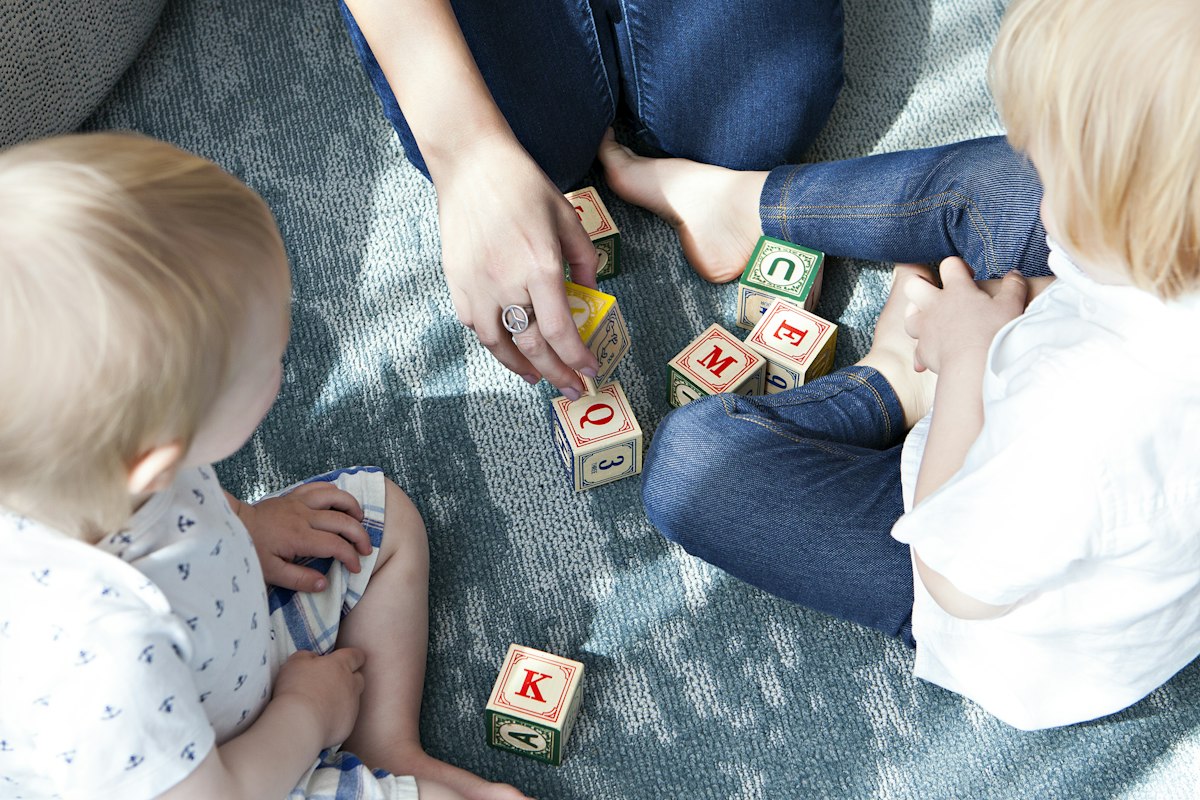
Why regular toddler activities don’t always work for twins
Three things are different with toddler twins, and most general activity lists don’t account for any of them: first, anything with only one of an item invites a fight, even when there are ten other toys in the room — toddlers this age don’t reliably self-regulate around scarcity yet. Second, you usually can’t give either twin the same one-on-one narration and hands-on help a single toddler would get, so an activity that needs constant adult involvement to work (threading beads, a multi-step craft) tends to fall apart for whichever twin isn’t currently getting your hands. Third, the emotional stakes are doubled — one twin’s meltdown is a strong trigger for the other’s, so activities that lower overall friction matter more than activities that are individually the “best” choice for a single child.
What actually works: parallel-play activities for toddler twins
The activities below are grouped by what makes them twin-friendly specifically — not just “toddler activities”, but ones built around having two kids doing the same thing side by side, at the same time, without needing to share one object.
Duplicate-friendly sensory play
Two matching scoop-and-pour bins
Set up two identical bins (dry rice, pasta, or oats) side by side, each with its own scoop and cup. Because the setup is identical, neither twin has anything to negotiate over — the “fairness” question is already solved before they sit down.
Twin water tables or two basins
One water table with two kids usually means one set of hands and one set of elbows-out. Two smaller basins (even mixing bowls on towels) at the same station let both twins scoop, pour, and splash without the elbowing.
Matching frozen-toy ice blocks
Freeze a small toy into a block of ice for each twin ahead of time, then hand out warm water and a spoon to “rescue” it. Identical blocks mean identical excitement, and the activity is self-paced so it doesn’t matter if one twin finishes first.
Side-by-side art stations
Two easels or two clipboards, same paper
A single easel is a classic twin flashpoint. Two cheap clipboards taped to a wall (or two easels if you have them) with the same paper and the same crayons laid out identically removes the “whose turn” question entirely.
Shared mural, separate sections
Roll out one long piece of butcher paper and use painter’s tape to mark a clear middle line — “your side, their side.” It’s still a shared activity, but the line pre-empts the most common twin argument (someone drew on my part).
Both-hands-busy stations
Two muffin tins, one pile of pom-poms or blocks
Give each twin their own empty muffin tin and tongs, then set one big shared pile of pom-poms or blocks between them. Having a shared pile (rather than two split piles) actually reduces conflict here, since there’s always visibly “enough,” and each twin’s own tin gives them a personal finish line.
Matching busy boards or shape sorters
If you have two of the same busy board, activity cube, or shape sorter, set them up in parallel rather than storing one away. Identical toys mean neither twin has a reason to abandon their own to go take their sibling’s.
Same-but-different building play
One big shared bin of blocks, two build zones
Large building sets (big soft blocks, duplo-style bricks) work better shared than split, since running out mid-build is what actually causes fights, not sharing itself. Mark two loose “zones” with a rug or a strip of tape so each twin has a base to build from and return to.
Cardboard box village, one box each
Give each twin their own cardboard box to decorate, crawl into, or turn into a “house”, then push the two together at the end. It’s parallel play that naturally becomes cooperative once both are done — without either twin needing to wait for the other to finish first.
Here is how the eight ideas above break down at a glance.
| Activity | Why it works for twins | What you need |
|---|---|---|
| Two matching scoop-and-pour bins | Identical setup, nothing to negotiate | 2 bins, dry rice/pasta, 2 scoops |
| Twin water tables or basins | Room for four hands, not two | 2 basins or tubs, towels |
| Matching frozen-toy ice blocks | Self-paced, no “who’s first” | 2 small toys, freezer, warm water |
| Two easels or clipboards | Removes the single-easel flashpoint | 2 clipboards or easels, same paper/crayons |
| Shared mural, taped middle line | Pre-empts the “you drew on my side” fight | Butcher paper, painter’s tape |
| Two muffin tins, one shared pile | Shared pile feels like “enough for both” | 2 muffin tins, tongs, pom-poms or blocks |
| Matching busy boards | No reason to abandon your own for theirs | 2 identical toys |
| Cardboard box village | Parallel play that merges naturally at the end | 2 boxes, markers or paint |
How do you handle it when they both want the exact same thing?
- Buy or borrow a second one when you can. For the handful of toys that cause repeat conflict, a $5-10 duplicate (a favorite stacking cup, a specific stuffed animal) often ends the fight for good — it’s usually cheaper than the daily stress of refereeing it.
- Use a visible timer for anything that truly can’t be duplicated. A 2-3 minute sand timer both twins can see removes you from having to be the judge of “whose turn is it” in real time.
- Rotate who gets first pick, out loud. Saying “Twin A picked first yesterday, so Twin B picks first today” in front of both of them, consistently, cuts down on the sense that one twin always loses.
- Let a genuine one-item conflict end the activity for both, calmly. If a specific toy keeps being the flashpoint, putting it away for the day (not as a punishment, just as a fact) is often faster than trying to manage it every time.
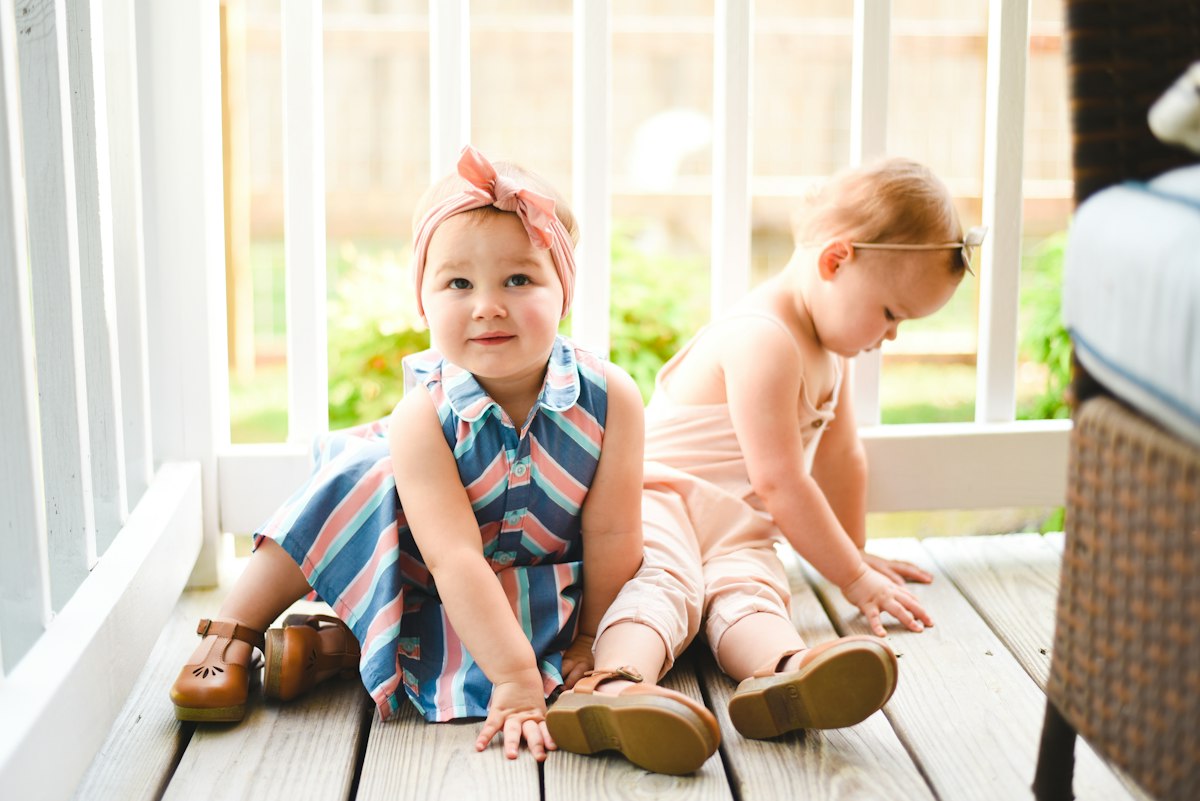
How is this different from our other toddler activities guides?
Our “I’m Bored” guide and our 5-minute zero-prep activities post are both built around a single toddler and a single set of hands — they don’t account for what changes when two toddlers want the same item at the same moment. This guide is specifically for the twin-parenting problem: not “what’s a good activity”, but “what activity survives two toddlers doing it at once.” If you’re managing a single toddler most days and only occasionally both together, those guides are still a great starting point — just watch for the single-item traps flagged above.
FAQ
Best Baby Monitor for Twins, Compared
Best Car Seats for Twins in 2026
Best Double Strollers for Twins in 2026