

Best Baby Carriers for Hiking in 2026
A soft-structured everyday carrier isn’t built for a 3-mile trail with a diaper bag and water. The best hiking carriers are framed backpack carriers rated for babies 6 months and up, with a hip belt that shifts the load to your legs. The Osprey Poco leads our list at 53 lb total capacity and 14L of storage — here’s how it compares to five other trail-ready picks.
Hiking carriers are a different category from the wrap or soft-structured carrier you probably use around the house. They’re built like a small hiking backpack with a child seat bolted in — aluminum frame, padded hip belt, sun and rain hoods, and enough storage for a real trail day. Most are rated for babies who can sit unassisted, generally 6 months and up; check your specific model’s minimum before buying.
Total carrying capacity: child + gear
Higher capacity means more room to grow with your child and pack real trail gear — but it usually trades off against the carrier’s own weight. See specs below.
Best hiking carriers at a glance
| Carrier | Carrier weight | Price | Capacity | Best for |
|---|---|---|---|---|
| Osprey Poco | 7 lb 12 oz | ~$330 | 53 lb total | Best all-around trail comfort |
| Deuter Kid Comfort | 7.2 lb | $320 | 48.5 lb total | Best hip-belt adjustability |
| Kelty Journey PerfectFit | 6 lb 6 oz | $219.99 | 50 lb total | Best value |
| Chicco SmartSupport | 6 lb | ~$150 | 17–40 lb child | Lightest, most affordable |
| Osprey Poco LT | ~5 lb | ~$300 | 45 lb total | Lightest full-size frame carrier |
The picks, in detail

Osprey Poco
A 14L pack, sunshade, and a hip belt built for real mileage — this is the carrier most outdoor-gear reviewers land on by default. Rated to 53 lb total (child plus gear), with room to grow well into toddlerhood.

Deuter Kid Comfort
Deuter’s “Vari-Flex” hip belt pivots with your stride instead of staying rigid, which reviewers consistently flag as more comfortable on uneven terrain than a fixed belt. Similar core specs to the Poco, slightly less total capacity.

Kelty Journey PerfectFit
Roughly $100 less than the Poco or Kid Comfort with a 50 lb total capacity and 17L of storage — the carrier most reviewers recommend if you’re not sure how much you’ll actually hike before your kid outgrows it.
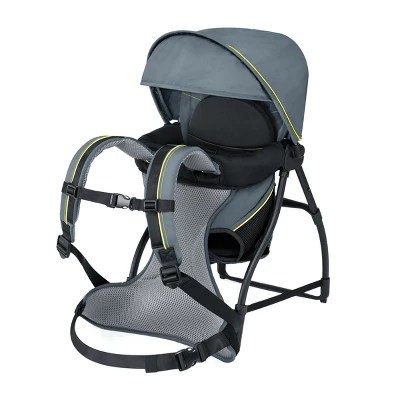
Chicco SmartSupport Backpack Carrier
At 6 lb, this is the lightest carrier on this list, with a kickstand for solo loading and 3D mesh venting. It has no built-in storage pockets beyond the sides, so plan on a separate day pack for gear.

Osprey Poco LT
A stripped-down version of the standard Poco at roughly 5 lb — Osprey trims weight by simplifying the suspension and storage, so you get the trusted Poco fit at a lighter carry weight, for a bit less capacity.
How old does a baby need to be for a hiking carrier?
Most framed hiking carriers are rated starting around 6 months, once a baby can sit unassisted with good head and neck control — check your specific model’s minimum, since a few soft-structured hybrids allow earlier use with an infant insert. This is different from an everyday soft-structured carrier or wrap, which can typically be used from birth and is the better choice for a newborn.
What should I actually pack for a hike with a baby carrier?
Beyond the usual water, snacks, and a change of clothes, sun protection matters more than it does on a stroller walk — a carrier puts your baby’s head above the shade line most strollers offer. Look for a carrier with a built-in sunshade, and plan on stopping every 45–60 minutes to check for overheating, since a carried baby doesn’t generate the airflow a stroller ride does.