
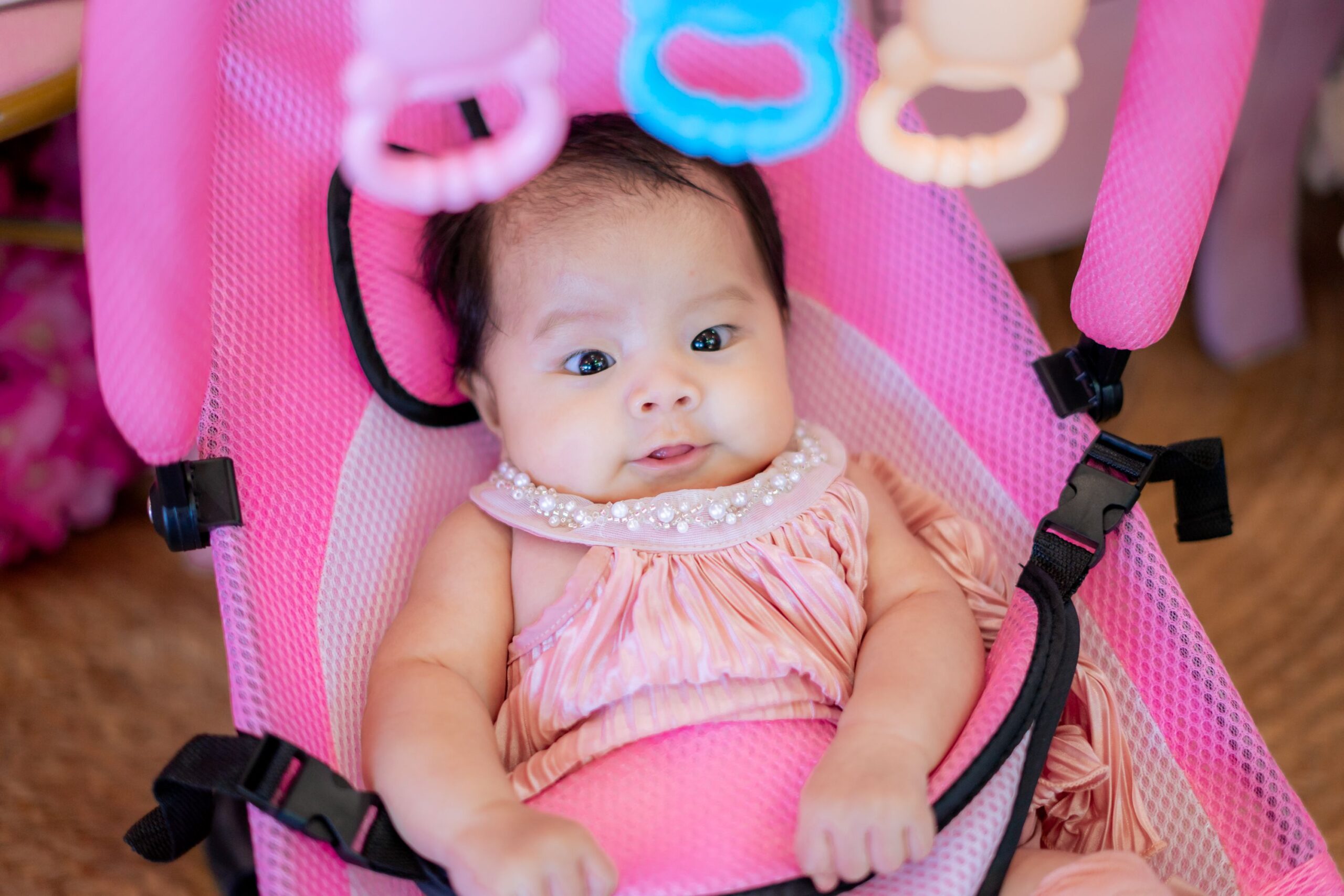
Bouncer vs. Swing: Which One Does Your Baby Actually Need?
A bouncer is a lightweight seat your baby moves themselves by kicking and wiggling; a swing is motorized and does the soothing work for you. If you’re buying one first, a bouncer covers more everyday situations for less money — but if your baby is hard to settle, a swing’s steady motion often works when nothing else does.
Bouncers and swings solve a similar problem — somewhere safe to set your baby down for a few minutes of hands-free time — but they work differently and aren’t interchangeable for every situation. Here’s the actual difference, which one to buy first, and the safety rules that apply to both.

What’s the actual difference?
| Bouncer | Swing | |
|---|---|---|
| Movement | Baby-powered — rocks or bounces from your baby’s own kicking and movement | Motorized — swings on its own, usually with multiple speed/motion settings |
| Typical price | $30–$100 | $100–$250+ |
| Portability | Lightweight, easy to move room to room | Bulkier, usually stays in one spot |
| Power source | None needed | Batteries or plug-in |
| Best for | Supervised awake play, quick hands-free moments | Soothing a fussy baby, helping with naps while supervised |
Which one should you buy first?
If you’re only buying one, a bouncer usually covers more everyday situations for less money: it’s easy to move between rooms, doesn’t need batteries, and works fine for a quick shower or a few minutes of hands-free play. A swing earns its higher price tag with babies who are genuinely hard to settle — the steady, consistent motion can work when bouncing, rocking, and everything else has failed. Many parents end up with both, but if budget or space forces a choice, start with the bouncer and add a swing later if you find your baby needs stronger motion to settle.

Safety rules that apply to both
Under the Safe Sleep for Babies Act, the Consumer Product Safety Commission’s rule effective September 2023 bans inclined sleep products with a sleep surface angled more than 10 degrees. Bouncers and swings aren’t sleep products and are excluded from that specific ban, but CPSC guidance is unambiguous about how to use them safely:
A pick for each category
4moms mamaRoo
Five motion settings (car ride, kangaroo, tree swing, wave, and rock-a-bye) built to mimic natural soothing movements, with Bluetooth speed and motion control. Frequently named a top pick by outlets like The Bump and Forbes Vetted based on parent testing panels.
BabyBjörn Bouncer
A breathable mesh seat that folds flat for storage and needs no batteries — it moves entirely from your baby’s own movement. Widely recommended across parenting review sites for its simplicity and small footprint.
Picks are based on manufacturer specs and aggregated parent/review-outlet coverage — not in-house tested by KidBlueprint.
Common questions
Related reading
Best Baby Monitors of 2026, Compared
20 Baby Sensory Activities for 0-12 Months
20 Newborn Sensory Play Activities (0-3 Months)