
Best Baby Carriers for Newborns of 2026
Structured carriers that fit newborns from about 7 lbs — no separate infant insert required, if you pick the right one.
The best baby carriers for newborns are built to fit infants from about 7 lbs without a separate infant insert, holding baby in the hip-healthy “M-position” with full head and neck support already built in. Our top pick for most families is the Ergobaby Omni Breeze, which works from 7 to 45 lbs with zero extra pieces to buy or lose. If you want something lighter and simpler for just the first few months, the BabyBjörn Baby Carrier Mini is easier to get on and off one-handed.
Our 5 picks for the best baby carriers for newborns

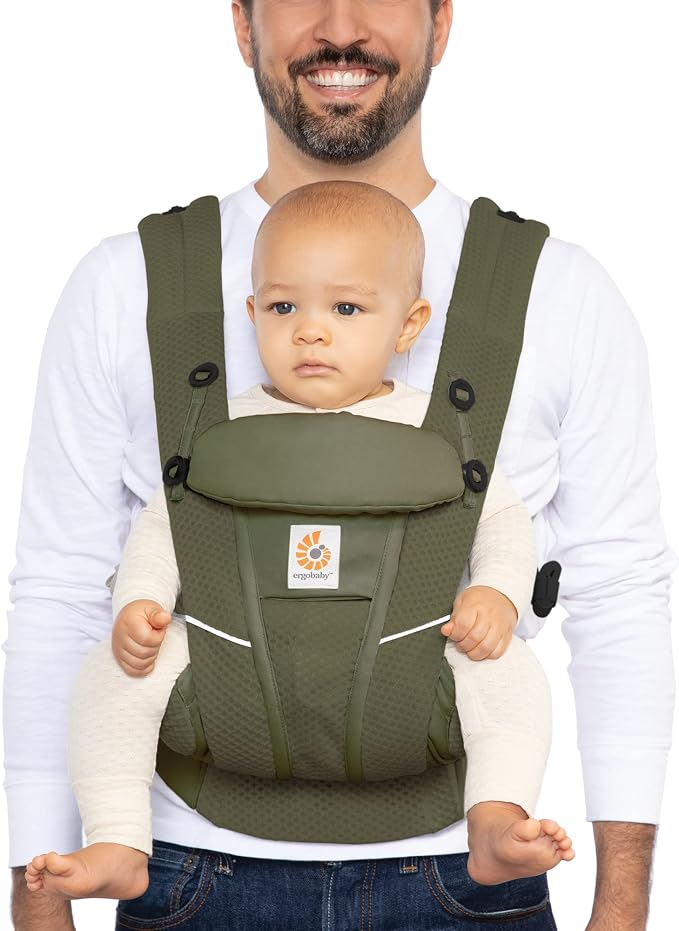
Ergobaby Omni Breeze
One carrier that fits from 7 lbs to 45 lbs with no insert to buy, so it may be the only carrier you ever need.
Why this one: The Omni Breeze adjusts at the hip, neck, and head panel to fit newborns without an add-on insert, then keeps adjusting as your baby grows into toddlerhood. Ergobaby rates it #1 for airflow among comparable carriers thanks to its SoftFlex mesh fabric.
Skip it if: you only need carrying for the first 3–4 months. At $200 it is a lot of carrier for a short newborn stage, and a lighter dedicated newborn carrier is easier to sling on for quick errands.

BabyBjörn Baby Carrier Mini
The simplest carrier to get on with one hand — a few buckles, no extra insert, no learning curve.
Why this one: BabyBjörn built the Mini specifically for the newborn stage. Soft, structured fabric supports baby’s back and head with just a few buckle adjustments, and you can unfasten the front panel to lay a sleeping baby down without waking them.
Skip it if: you want one carrier to last past the first year. It tops out around 24 lbs (roughly 12 months) and only carries facing in, so most families outgrow it and add a second carrier later.

Ergobaby Embrace
A soft-knit, cocoon-style carrier built only for the newborn stage, with cushioned head and neck support sewn in.
Why this one: At just 1.1 lb, the Embrace is the lightest carrier on this list and the closest thing to babywearing with a wrap — without the tying learning curve. Cushioned neck support is built into the panel, so there is nothing separate to attach or lose.
Skip it if: you want back-carry or forward-facing options later. The Embrace only does inward-facing front carry, so it’s a newborn-stage purchase most parents eventually pair with a second carrier.

Baby Tula Free-to-Grow
An adjustable body panel that fits newborns through toddlers without a separate insert — one carrier for the whole babywearing stretch.
Why this one: Tula’s adjustable panel narrows and shortens for a newborn’s smaller frame, then expands as your baby grows — no insert to buy, and no need to replace the carrier at 6 months. It’s a popular pick for parents who want one carrier from birth to preschool.
Skip it if: you want a hip-carry option. Tula’s Free-to-Grow line covers front and back carry only, while a couple of other picks on this list add hip carry.

Momcozy WeeSnug
A purpose-built newborn carrier with foldable head support for well under $100.
Why this one: The WeeSnug is built specifically for the newborn stage, with a foldable head-support panel and a visual weight/height adjustment scale so you can confirm you’re using the right setting. It’s the most affordable dedicated newborn carrier on this list.
Skip it if: you want a carrier that lasts well past a year. Like the BabyBjörn Mini and Ergobaby Embrace, this is a newborn-stage carrier most parents replace once baby outgrows the 25 lb range.
How to choose a carrier for a newborn
- Check the minimum weight and height. Most structured carriers need baby to be at least 7 lbs and about 20 inches before use — below that, a wrap or sling is usually the safer choice.
- Look for built-in head and neck support. Newborns can’t yet support their own head, so the carrier panel — not an add-on pillow — should hold it in place automatically.
- Confirm the M-position. Baby’s knees should sit higher than their bottom in a natural frog-leg position. This is what pediatric hip specialists recommend, and what “hip-healthy” or IHDI-certified means on a label.
- Decide if you want to skip the infant insert. Carriers with an adjustable or newborn-specific panel fit directly; others (mostly toddler-focused buckle carriers) need a separate insert — one more piece to buy, wash, and eventually stop using.
- Think past the newborn stage. A carrier that only fits to 25 lbs will need replacing around your baby’s first birthday; an adjustable one like the Omni Breeze or Free-to-Grow carries you through toddlerhood.
Do newborns need a special infant insert?
Not always — it depends on the carrier’s design. Buckle carriers built around a fixed-size body panel (common on toddler-focused carriers) often require a separate infant insert to narrow the seat and add head support for babies under about 15 lbs. Carriers designed with an adjustable or newborn-specific panel — like the Ergobaby Omni Breeze, Baby Tula Free-to-Grow, BabyBjörn Mini, and Ergobaby Embrace above — build that support directly in, so there’s nothing extra to buy. If you already own a carrier and aren’t sure whether it needs an insert for a newborn, check the manufacturer’s listed minimum weight: anything around 7–8 lbs with no insert mentioned is typically ready to use from birth. That hip-safe, insert-free design is exactly what separates the best baby carriers for newborns from carriers built for an older baby first. For more on safe positioning, see the International Hip Dysplasia Institute’s babywearing guidance.