
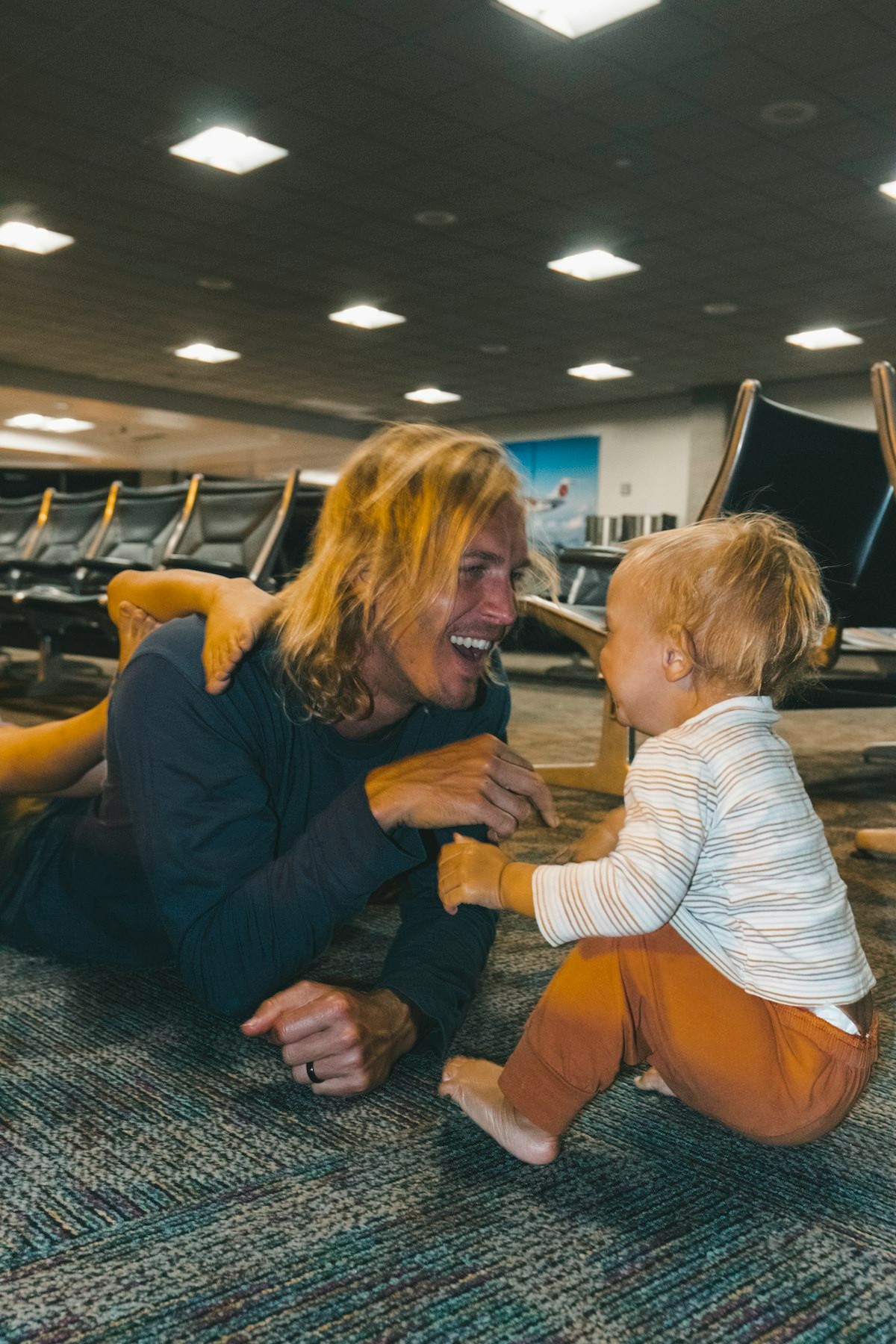
The flight itself is rarely the hard part. It’s the 45 minutes before boarding and the descent that tend to go sideways. A little planning around timing, not just packing, makes the whole trip more predictable.
Before you book: seat and timing decisions
A few decisions matter more once, before the trip, than anything you pack.
- Lap infant vs. their own seat: under 2, airlines let babies fly on your lap for free (or a reduced international fare), but a booked seat with an FAA-approved car seat is safer and gives you a place to set them down. If the flight is long or you can afford the extra seat, book it.
- Bulkhead seats often mean more floor room and sometimes a bassinet option on international widebody flights, worth calling to ask about specifically rather than assuming it’s automatic.
- Time the flight around your baby’s best stretch, not the cheapest fare. A flight that overlaps a long nap or overnight sleep window beats a cheaper flight that fights their whole schedule.
- Build in extra connection time. A tight layover with a stroller, car seat, and a diaper bag is a bad combination, especially if you need to change terminals.
The go-bag: what actually needs to be in reach
Pack the diaper bag assuming you can’t access checked luggage or the overhead bin mid-flight. Everything below should be reachable from your seat.
- Diapers: figure 1 per hour of total travel time (gate to destination), plus 2-3 extra for delays.
- A full outfit change for the baby, and a spare shirt for you. Blowouts happen at altitude.
- Wipes in a resealable bag, plus a small pack of hand sanitizer or wipes for surfaces.
- Feeding supplies: bottles pre-measured or breastfeeding cover if that’s your preference, and snacks for anyone over 6 months.
- A pacifier or two, plus a backup in a different pocket. Losing the one pacifier at 30,000 feet is its own crisis.
- One or two new, small, never-seen-before toys or books, saved specifically for the flight as a novelty distraction.
- A lightweight swaddle or blanket, since planes run cold regardless of the season.
Getting through security
TSA allows breast milk, formula, and juice in reasonable quantities beyond the standard liquids limit, you don’t need to fit it in a quart bag, but tell the officer you’re carrying it before screening starts. Gate-checking a stroller and car seat is free on nearly every US airline: keep them with you through security and check them at the jet bridge door, not at the counter, so you have them until the last possible moment.
Timing feeds around takeoff and landing
Ear pressure during ascent and descent is the single biggest cause of in-flight crying, and it’s largely preventable. Swallowing relieves the pressure, so feed or offer a pacifier during both climb and descent specifically, not just whenever they seem hungry.
- Time a bottle or nursing session to start right as the plane begins its descent, not after you feel the pressure change yourself.
- For toddlers past bottles, a drink with a straw or lollipop works the same way for the swallow reflex.
- If they’re asleep during descent, it’s usually fine to let them sleep through it. Waking a sleeping baby to force a feed often causes more distress than the ear pressure would.
If it goes sideways anyway
Meltdowns happen, and most of the plane has either been there or will be someday. A few things help more than an apologetic scramble.
- Walk the aisle (when the seatbelt sign is off) rather than staying pinned in the seat. A change of scenery resets a lot of meltdowns.
- Bring small snacks strategically rather than all at once, a slow trickle of novelty lasts longer than one big reveal early in the flight.
- Skip the guilt. A crying baby on a plane is a Tuesday for flight crews, not a crisis for anyone but you.
What changes by age
The same flight looks different depending on the stage you’re in, and it’s worth planning around the actual challenges of your baby’s age rather than generic advice.
- Under 4 months: the easiest window in some ways, since babies this age sleep a lot and aren’t mobile. The main job is protecting feeds and naps and not overstimulating them in the airport beforehand.
- 4 to 12 months: more alert and more opinionated about being confined. Bring more novelty items than you think you need, and expect at least one stretch of fussiness regardless of prep.
- 12 to 24 months: the hardest stretch for a lot of parents. Mobile enough to want to move, not yet able to sit through a movie or occupy themselves for long. Budget for walking the aisle and accept that screen time rules relax for travel days.
- 2 to 4 years: old enough to engage with a tablet, activity book, or story, which genuinely changes the flight. This is also the age where a window or aisle preference starts to matter to them, worth asking at check-in.
After you land: handling the time change
Jet lag in babies and toddlers is real, and it’s usually worse than adult jet lag because their schedules are more rigid. A few things make the adjustment faster.
- Get outside in daylight as soon as you can after landing. Light exposure is the biggest driver of resetting a body clock, for babies as much as adults.
- Shift bedtime toward the new time zone by 30 to 60 minutes a day rather than forcing the full change on night one.
- Expect one to two rough nights for every time zone crossed, and don’t panic if the first night or two involves an early wake-up or a middle-of-the-night wide-awake stretch. It resolves faster than it feels like it will.
- If it’s a short trip (under 4-5 days), some families skip the adjustment entirely and keep the baby on home-time for the whole visit rather than fighting jet lag twice.
If you’re still deciding on travel gear, our Stroller Finder can help match a travel-friendly stroller to your trip, and the Newborn Schedule Estimator is useful for figuring out what feed and nap timing to expect if you’re flying with a very young baby.