
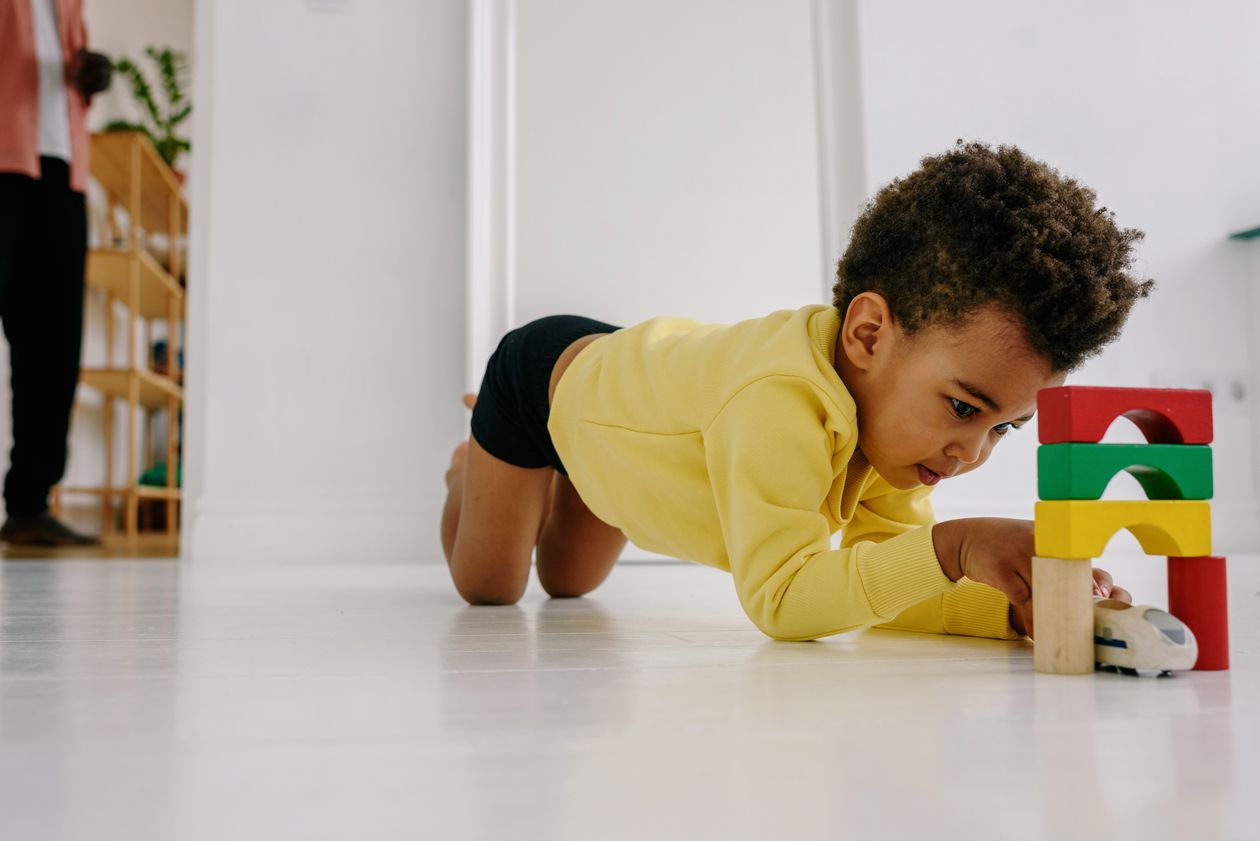
Toddlers age 2 to 3 can build real independent play with low-stimulation, screen-free activities like busy boards, felt boards, and soft building blocks, the kind of activities chosen specifically for solo engagement rather than something a parent has to run.
Quiet time activities are different from regular play. They’re calmer, more repetitive, and don’t need supervision the way a sensory bin or a game does, which is the whole point when you need a genuinely hands-off stretch.
5 to 10 minutes solo
- Sticker book: no setup, and the repetitive peeling and placing holds attention longer than it looks like it should.
- Board books, self-browsed: a small basket of familiar books a toddler can flip through without needing to be read to.
- Shape sorter: works well as a short bridge activity between two longer ones.
10 to 20 minutes solo
- Busy board with latches, zippers, and buttons: repetitive and self-directed once shown the basic idea, a strong pick for this age specifically since fine motor curiosity peaks around now.
- Felt board with shapes: toddlers can rearrange felt shapes independently after being shown once. Quiet, low-mess, reusable indefinitely.
- Soft building blocks: enough novelty to hold attention without small pieces to supervise closely.
Building toward a longer stretch
- Magnetic tiles: the longest solo play window on this list once a toddler is used to them, often 15 to 25 minutes.
- Rotate two activities back to back rather than expecting one to fill the whole stretch. A felt board followed by magnetic tiles buys more total time than either alone.
Setting the expectation
At this age, quiet time doesn’t mean silent, it means solo, low-stimulation play nearby while you get a hands-off stretch. Start with 10 minutes and build up gradually rather than expecting 30 minutes right away. If your toddler won’t play independently at all yet, sit nearby without participating for the first few sessions, then gradually increase the physical distance as they get comfortable.
Frequently asked questions
How long should quiet time last for a 2-year-old?
Start with 10 to 15 minutes and build gradually. Most 2-year-olds can sustain independent play for up to 20 minutes once they’re used to the routine.
What if my toddler won’t play independently at all?
Sit nearby without participating for the first few sessions, then gradually increase your physical distance as they get comfortable with the idea.
Is quiet time the same as a nap replacement?
It can be, once naps stop. Many parents use a scheduled quiet time as a way to preserve some of the same daily downtime a nap used to provide.
What activities should I avoid for quiet time?
Anything that needs adult supervision, like water play or activities with small parts near siblings, defeats the purpose. Stick to self-contained, low-risk options.
Grab the printable Quiet Time Activity Chart to rotate a new one in each day. For the stretch before bed instead, see our step-by-step bedtime routine guide.