
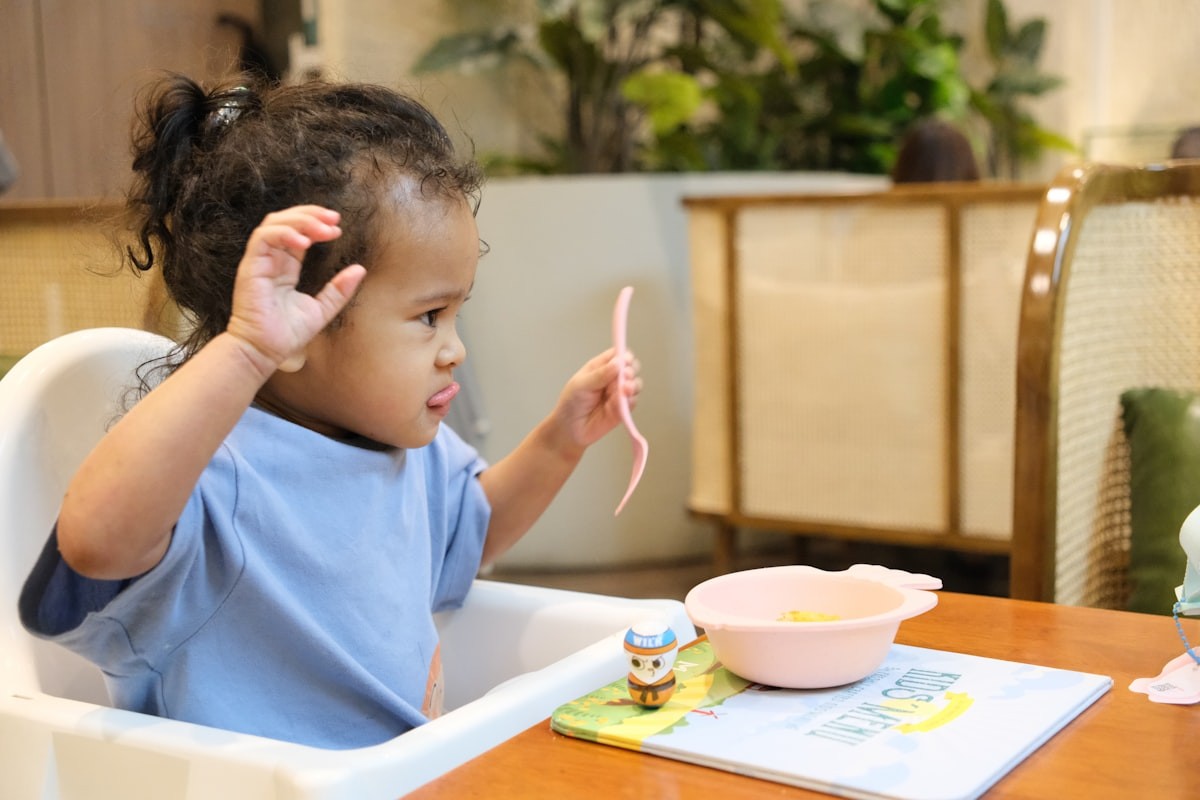
A food jag is when a toddler wants the exact same food, prepared the exact same way, for days or weeks at a time. It’s common and usually temporary. It’s only worth addressing directly if it starts crowding out enough other foods that the overall diet feels genuinely narrow, not just repetitive.
Mealtime gear matters too, especially if space is tight. We compared compact and folding options in Best High Chairs for Small Kitchens, Compared.
Not at solids yet? Our Newborn Schedule Estimator covers typical feeding amounts and frequency for babies from birth to 6 months.
Picky eating between ages 2 and 5 is developmentally normal, not a sign you’re doing something wrong. The goal of a rotation isn’t to trick anyone into eating vegetables, it’s to take the daily “what do I even make” decision off your plate.
When picky eating is more than a phase
Most picky eating at this age is developmentally normal and not a sign of anything wrong. It’s worth a conversation with your pediatrician if your toddler is losing weight or not tracking their growth curve, if they’re eliminating entire food groups or textures rather than just being selective, if mealtimes involve regular gagging, vomiting, or panic, or if the pickiness is severe enough that it’s limiting family activities like eating out or visiting relatives. Most kids who are otherwise growing well and just have a short, repetitive list of accepted foods don’t need intervention beyond time and low-pressure exposure.
Breakfast rotation
- Whole-grain waffle or pancake with a fruit side, made ahead and frozen in batches.
- Scrambled eggs with cheese and toast strips.
- Plain yogurt with a mix-in like granola or a spoon of jam, kids often prefer mixing it themselves.
- Oatmeal with a small bowl of toppings on the side (berries, cinnamon, a drizzle of honey) so they can choose.
- Leftover dinner. There’s no rule that breakfast has to be breakfast food.
Lunch rotation
- Quesadilla cut into strips with a side of fruit.
- Pasta with butter or olive oil, cheese, and a vegetable served separately rather than mixed in.
- Deconstructed sandwich: bread, protein, and toppings served apart so they can build it their own way.
- Rice with a protein and a plain vegetable on the side.
- Soup, even a simple canned or store-bought one, alongside crackers or bread.
Dinner rotation
- One familiar “safe” component on the plate every night, even if the rest of the meal is new. This lowers the stakes of trying something else.
- Sheet-pan chicken or tofu with a starch and a vegetable kept separate rather than combined into one dish.
- Build-your-own taco or rice bowl night, where components are laid out and everyone assembles their own.
- Breakfast-for-dinner, which tends to have a high acceptance rate and needs almost no planning.
- A repeat of whatever worked well earlier in the week. Repetition is fine and often preferred at this age.
Snacks that also cover gaps
- Cheese and crackers
- Apple slices with a nut or seed butter
- Hummus with soft-cooked or raw vegetable sticks
- A smoothie, which is an easy way to include fruit or vegetables that wouldn’t be eaten whole
A few things that actually help with refusal
- Offer new foods alongside familiar ones instead of replacing what they already eat.
- Expect repeated exposure to matter more than persuasion. Some kids need to see a food many times before trying it.
- Let them serve themselves when possible. Autonomy over what and how much reduces pressure at the table.
- Keep new-food attempts low-pressure. A food eaten under pressure once is less likely to be tried again voluntarily.
Frequently asked questions
Should I make a separate meal if my toddler won’t eat what we’re having?
Most feeding specialists recommend against a separate “kid meal” every night, since it removes the motivation to try what’s on the table. The safe-food-on-the-plate approach above is a middle ground, everyone eats roughly the same meal, but there’s always something on it your toddler will actually eat.
How many times do I really need to offer a new food before giving up?
There’s no fixed number that applies to every kid, but repeated, low-pressure exposure over many separate meals is generally more effective than a single big push. If a food has been offered calmly a dozen or more times with no interest, it’s reasonable to set it aside and revisit it in a few months.
Is it okay to use dessert or screen time as a reward for eating?
Most guidance leans against using food or screens as a direct reward for eating, since it can add pressure to mealtimes and shift the focus from the food itself to the reward. A predictable, low-pressure routine tends to work better over time than a system of rewards.
Is it okay to hide vegetables in foods like sauces or muffins?
It’s a reasonable short-term strategy if it gets your toddler eating a wider range of nutrients, but most feeding specialists suggest not relying on it long-term, since it doesn’t build familiarity with how the food actually looks and tastes. A mix, some hidden, some visible and offered without pressure, tends to work better than choosing one approach exclusively.
What counts as a “food jag,” and is it something to worry about?
A food jag is when a toddler wants the exact same food, prepared the exact same way, for days or weeks at a time. It’s common and usually temporary. It’s only worth addressing directly if it starts crowding out enough other foods that the overall diet feels genuinely narrow, not just repetitive.
Mealtime gear matters too, especially if space is tight. We compared compact and folding options in Best High Chairs for Small Kitchens, Compared.
Not at solids yet? Our Newborn Schedule Estimator covers typical feeding amounts and frequency for babies from birth to 6 months.