
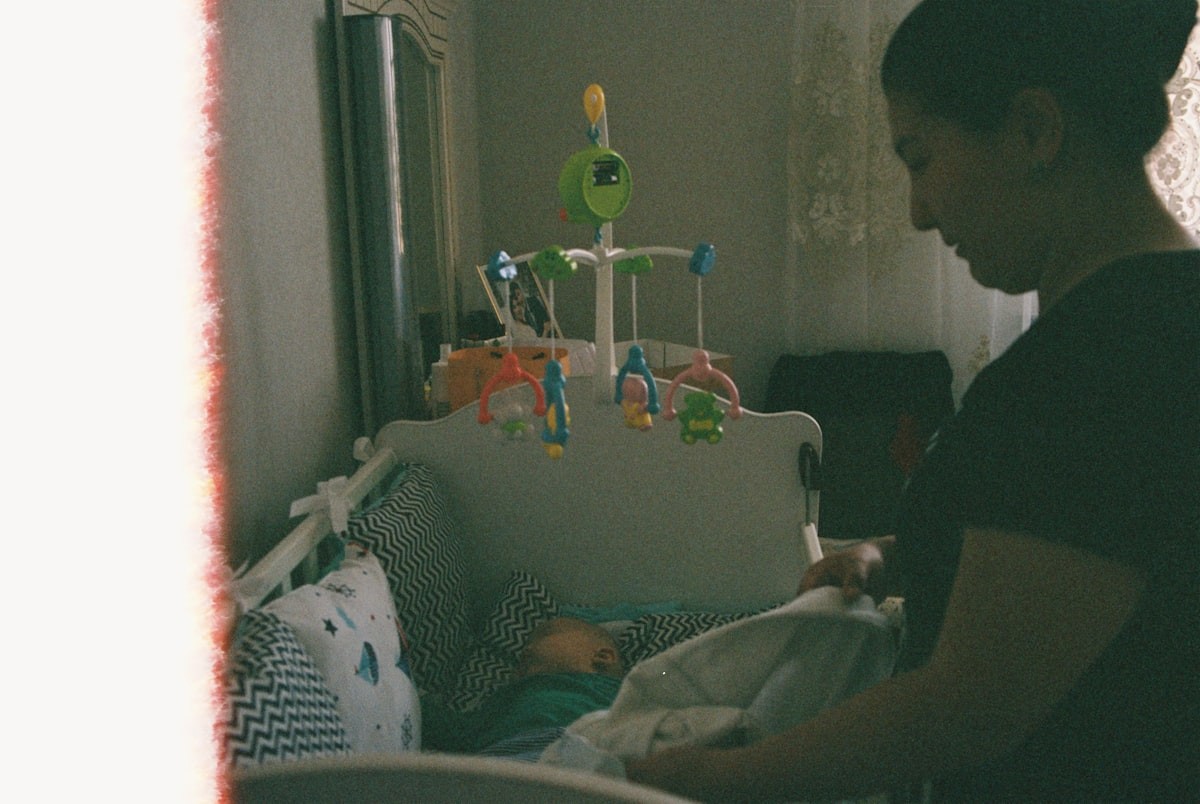
A bedtime routine doesn’t need to be elaborate to work. What matters is that it’s predictable, in the same order, most nights. The specific activities matter less than the fact that your child can see what’s coming next.
0 to 3 months: keep it loose
Newborns don’t have a real sense of day and night yet, so a rigid routine won’t stick. The goal here is just to start associating a few cues with sleep.
- Dim the lights an hour before you want bedtime to start signaling nighttime.
- Do a last feed in a quiet, low-stimulation room.
- Swaddle or use a sleep sack as a consistent “this means sleep” cue.
- Skip the strict schedule. Follow wake windows instead of the clock at this age.
4 to 11 months: build the actual sequence
This is the age where a repeatable routine starts to pay off. Babies this age can genuinely learn that bath leads to pajamas leads to a book leads to the crib.
- Bath (doesn’t need to be nightly, but pick a rhythm and stick with it).
- Pajamas and a diaper change in the same spot each night.
- One or two board books, read the same way each time.
- A last feed before the crib, not in the crib, to avoid a feed-to-sleep association if you’re trying to avoid that.
- Into the crib awake but drowsy, if you’re working on independent sleep.
12 to 24 months: add structure and a few choices
Toddlers push back on things done to them and cooperate more with things they get to choose. Keep the sequence identical, but hand over small decisions inside it.
- Let them pick which of two books to read, not whether to read one.
- Add a consistent goodnight phrase or song so the routine has a clear ending.
- Keep the whole routine to 20 to 30 minutes. Longer routines give more room for stalling.
- A nightlight or a comfort object can be introduced now if separation is coming up as an issue.
2 to 5 years: expect stalling, plan for it
This is the age of “one more book,” “I’m thirsty,” and “I forgot to tell you something.” Stalling is normal and mostly about wanting more time with you, not defiance.
- Build in one buffer request, like a single sip of water, so it’s already accounted for instead of a negotiation.
- Use a visual chart or a simple checklist for kids who like to see the steps.
- Say goodnight once and leave. Repeated returns tend to reinforce the stalling.
- If nerves about the dark or being alone are the real issue, address that directly rather than just adding more steps to the routine.
Common bedtime routine mistakes
A few things tend to undo an otherwise solid routine. Changing the order of steps night to night removes the predictability that makes a routine work in the first place, even small swaps like reading before pajamas instead of after can throw off a toddler who’s tracking the sequence. Letting the routine stretch past 30 to 40 minutes tends to backfire too, since more time usually just means more opportunities to stall rather than a calmer wind-down. And starting the routine at a different time each night, chasing an overtired kid’s mood instead of the clock, makes it harder for a young child to predict what’s coming.
Frequently asked questions
What if my child falls asleep during the routine, like during the last book?
It’s fine occasionally, but if it’s happening most nights, the routine may be starting too late relative to when your child is actually getting sleepy. Try shifting the whole sequence 15 to 20 minutes earlier for a week and see if it resolves.
Do older siblings need a different routine than younger ones?
They can share a routine’s structure and still have age-appropriate differences, an older sibling might get more choice in the sequence, or handle the goodbye step differently. Keeping bedtimes staggered by 20 to 30 minutes rather than identical tends to work better once there’s more than one child.
How long does it take for a new routine to actually work?
Most families see the routine start to feel automatic within one to two weeks of consistent repetition. The first several nights of any new routine are usually the least smooth, that’s normal and not a sign it isn’t working.
A consistent routine also makes it easier to spot real sleep problems instead of guessing. If naps are falling apart around age two, see our nap transition guide. If the room itself is the issue, sound and light matter more than most parents expect, we compared options in Best White Noise Machines for Babies, Compared.
If you’re still in the newborn stretch and just want a sense of what’s typical right now, our Newborn Schedule Estimator breaks down expected sleep, feeding, and diaper ranges by age.