
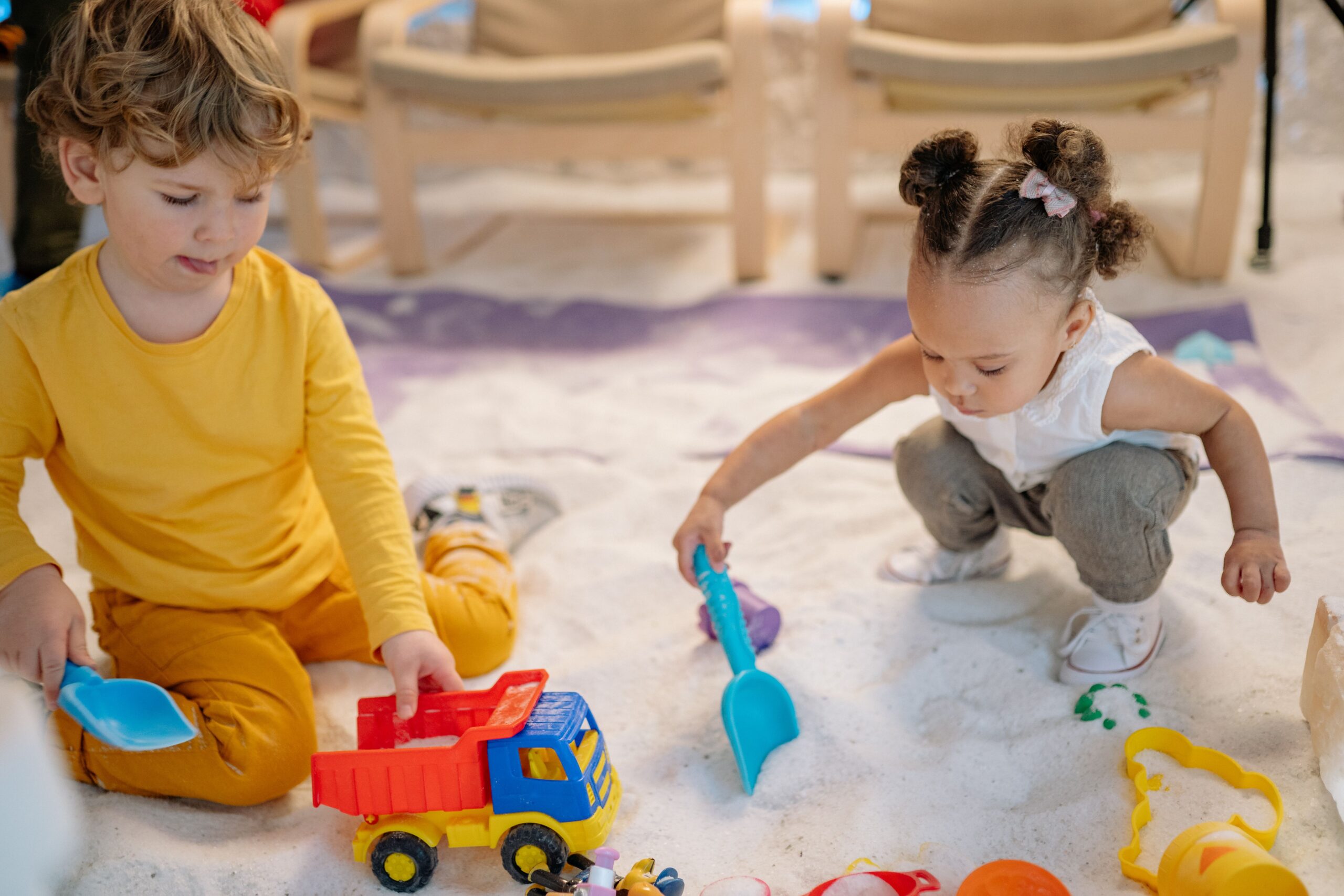
10 Indoor Gross Motor Activities for Toddlers (No Backyard Needed)
When it’s too cold, wet, or dark to get outside, toddlers still need to move their whole body every day. These 12 indoor gross motor activities use things you probably already have — couch cushions, painter’s tape, a laundry basket — and take under 10 minutes to set up.
Toddlers are wired to move, and skipping that on an indoor day usually shows up later as a rough bedtime or a meltdown-heavy afternoon. You don’t need equipment or a finished basement — a cleared 6×6 foot patch of floor is enough for most of these. They’re grouped below by the movement skill each one builds: balance and coordination, strength and full-body movement, and rhythm and following directions.

Balance & coordination
Painter’s-tape balance beam
Lay a strip of painter’s tape in a straight or zig-zag line across the floor and have your toddler walk heel-to-toe along it, arms out for balance. Make it a game by adding a stuffed animal to carry across without dropping it.
Paper-plate ice skating
Put a foot on each paper plate and glide around a cleared, hard-flooring area like an ice rink. It works balance and core control while feeling like play instead of exercise. Skip this one on carpet — it needs a smooth surface to slide.
Pillow-and-cushion stepping stones
Spread couch cushions across the floor as “stepping stones” over an imaginary river. Toddlers work on balance and motor planning figuring out where to step next, and you can rearrange the path for a fresh challenge each time.
Strength & full-body movement
Pillow-fort obstacle course
Build a simple crawl-through tunnel with chairs and a blanket, add a cushion to climb over, and finish with a spot to jump onto a soft landing. Toddlers get climbing, crawling, and jumping practice in one setup, and rebuilding it becomes its own activity.
Laundry-basket basketball
Set a laundry basket a few feet away and let your toddler toss rolled-up socks or soft balls into it. Move the basket farther for older toddlers or closer for beginners — it builds throwing form and hand-eye coordination with almost no setup.
Animal walk relay
Set two points across the room and have your toddler travel between them as different animals: bear crawl on hands and feet, crab walk backward, frog jump, or penguin waddle. Each animal works a different muscle group, and toddlers usually ask to repeat this one.
Balloon volleyball
Bat a balloon back and forth or keep it off the ground as long as possible. It’s slow enough for toddlers to track and hit successfully, which builds hand-eye coordination and gets a surprising amount of full-body movement out of a $0 prop.

Rhythm & following directions
Freeze dance
Play upbeat music and dance freely; when the music stops, freeze in place until it starts again. It builds body control and listening skills, and toddlers love adding silly freeze poses of their own.
Simon Says, movement edition
Play a movement-only version of Simon Says: “Simon says jump three times,” “Simon says spin in a circle,” “Simon says touch your toes.” It builds gross motor skills and instruction-following at the same time, and toddlers can take turns being Simon once they get the hang of it.
Marching band parade
Hand your toddler a pot and a wooden spoon (or a homemade shaker) and march laps around the living room to a beat. High knees, big arm swings, and loud drumming all count — it’s louder than most activities on this list, but it burns real energy.
Setting up a safe indoor movement space
Move furniture with sharp corners out of the main play area, and use a rug or foam mat to soften any falls. A few pillows or a strip of tape can mark the play zone’s boundaries so toddlers learn where the “stage” is. None of these activities need a dedicated playroom — a cleared corner of a living room works for all twelve.
Common questions
Related reading
Low-Prep Backyard Activities for Toddlers This Summer
Best Rainy Day Activities for Preschoolers
Screen-Free Quiet Time Activities for Toddlers (Ages 2-3)