
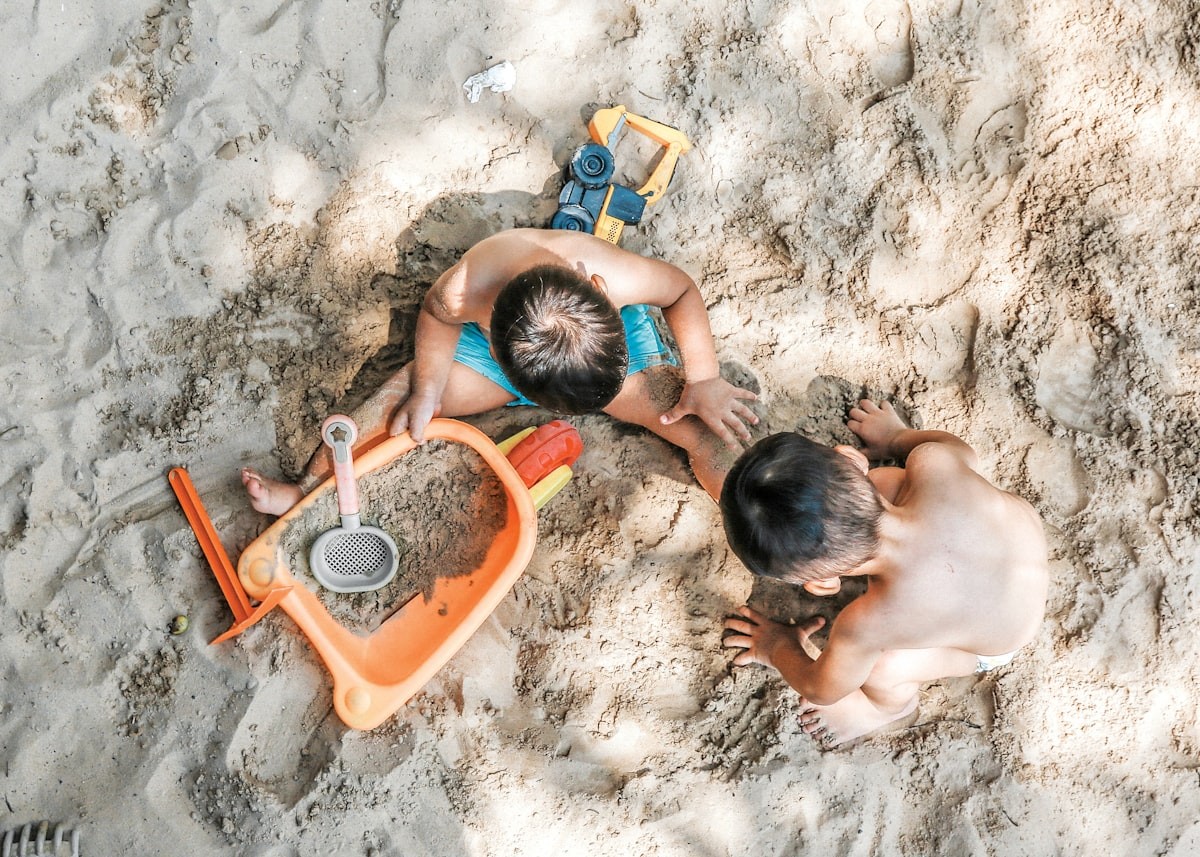
A beach day with a toddler is really two trips happening at once. There’s the one you picture, with sandcastles and shallow waves, and there’s the one you actually run, which is mostly sunscreen reapplication, snack management, and keeping a fast, wet toddler within arm’s reach. Pack for the second one and the first one takes care of itself.

Sun protection: what actually matters
The American Academy of Pediatrics splits its guidance by age, and it’s worth knowing the line. Babies under 6 months should stay out of direct sun entirely. Dress them in lightweight long sleeves, long pants, and a brimmed hat, and rely on shade rather than sunscreen. If shade and clothing aren’t enough coverage, a small amount of SPF 15+ sunscreen on exposed spots like the face and hands is fine.
For babies 6 months and older, use a broad-spectrum sunscreen of at least SPF 30. Mineral sunscreens with zinc oxide or titanium dioxide are the safer pick for sensitive or eczema-prone skin. Apply it 15 to 30 minutes before you head out, and reapply every two hours or right after swimming, since no sunscreen is actually waterproof no matter what the label says.
- Broad-spectrum SPF 30+ sunscreen (mineral formula if skin is sensitive)
- Wide-brimmed hat and UPF swim shirt for toddlers
- A pop-up beach tent or umbrella for a real shade base, not just a towel
- Sunglasses with UV protection, if your toddler will tolerate them (most won’t, and that’s fine)
Water safety comes first
This is the one section of this guide that isn’t optional. The AAP’s drowning prevention guidance centers on what it calls touch supervision: an adult within arm’s reach of any child under 5 who is in or near water, close enough to grab a wrist, not just watch from a chair. Toddler drowning is silent and fast. A child can go under in less than 30 seconds with no splash and no cry for help.
Whoever is on water duty should have exactly one job at that moment. Not scrolling a phone, not chatting with the group, not half-watching while setting up lunch. If you’re with other adults, say out loud who has the water watch and trade off deliberately rather than assuming someone else has it.
- Stay within arm’s reach of your toddler in or near the water at all times
- Assign one adult as the dedicated water watcher and rotate on purpose
- Consider swim lessons starting after your child’s first birthday as one layer of protection, not a replacement for supervision
- A Coast Guard-approved life jacket adds a layer for open water or boats, but it doesn’t replace touch supervision
The diaper bag for a beach day
Sand gets into everything, so the beach version of your diaper bag needs a few extras beyond your usual pack.
- Swim diapers if your toddler isn’t potty trained (regular diapers swell and fall apart in water)
- A few regular diapers for the car ride and any time out of the water
- Wipes in a sealed sandwich bag or container, since an open wipes pack turns into a sand trap fast
- A full change of clothes, including socks, for the ride home
- Two extra plastic or mesh bags: one for wet swimsuits, one for anything sandy
Food, water, and heat
Toddlers overheat faster than adults and don’t always tell you until they’re already cranky or flushed. Plan around the sun rather than fighting it.
- Aim for a shaded home base and try to avoid peak sun from about 10am to 4pm when possible
- Offer water regularly, even if your toddler doesn’t ask for it
- Pack snacks that hold up to heat and sand: crackers, cut fruit in a container, cheese sticks. Skip anything that melts or crumbles into a mess that attracts sand
- Watch for flushed skin, fussiness, or unusual sleepiness, which can be early signs of overheating
Gear worth bringing
- A UPF 50+ pop-up beach tent, which does double duty as shade and a home base your toddler can recognize from a distance
- A lightweight beach wagon or stroller that handles sand, if you’re hauling gear any real distance
- A few sand toys, but not the whole bin. A bucket, a shovel, and a truck cover most of what a toddler actually plays with
- A dry bag or ziplock for phones and keys near the water
What changes by age
- Under 6 months: Skip direct sun entirely. Shade, a hat, and light clothing do the work. Keep visits shorter since babies this age tire and overheat quickly.
- 6 to 12 months: Sunscreen is now in play. Expect a lot of mouthing sand and shells, so stay close and check hands often.
- 1 to 2 years: Mobile and fast toward water. This is peak touch-supervision territory since curiosity outpaces caution completely.
- 2 to 4 years: More independent play, but still needs constant water supervision. This is a good age to start basic swim lessons as one layer of a broader safety plan.
A good beach day with a toddler isn’t the one with the fanciest gear. It’s the one where sunscreen got reapplied on schedule, someone had eyes on the water the whole time, and everyone made it home before the meltdown hit. If you’re planning a longer trip around the beach day, our guide to flying with a baby covers the rest of the logistics, and our Newborn Schedule Estimator can help you plan naps around a day out if you’re traveling with a younger baby.